

Updating Threshold Settings
Update the threshold settings or change the threshold type on individual validators in Validio, with before-and-after comparison and incident impact review.
Updating a validator's threshold changes when the validator flags a metric as an incident. You can adjust the settings of the current threshold type, or switch the validator to a different threshold type, such as from a fixed threshold to a dynamic threshold. To open the Update threshold dialog, go to the validator's details page, open the Metric tab, and click Update threshold. This option is not available on the Overview tab.
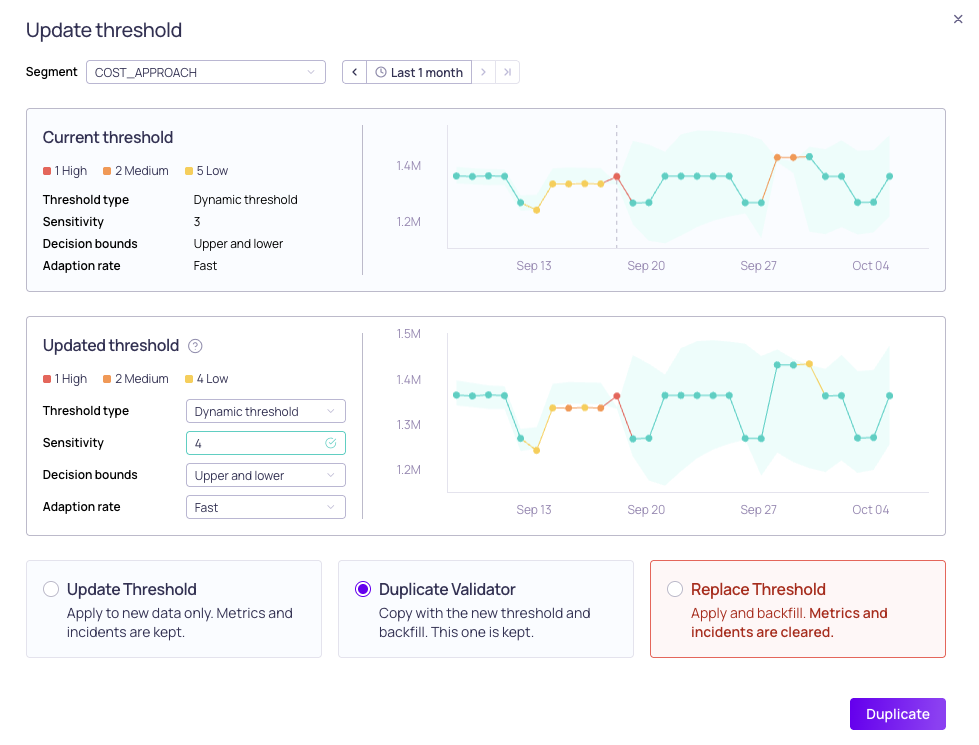
Update threshold dialog comparing the current threshold and the updated threshold
The Update threshold dialog lets you:
- Choose the threshold type and adjust its settings. For what each setting does, see Configuring Dynamic Thresholds, Configuring Fixed Thresholds, and Configuring Difference Thresholds. To decide which type fits your metric, see About Thresholds.
- Change the time range and segment shown in the preview. Threshold updates apply to all segments.
- Compare the Current threshold and Updated threshold graphs side by side. For example, this makes it easier to compare two different sensitivity values for dynamic thresholds.
- Review a summary of the incidents generated over time, to help you understand how often you would be alerted with the updated threshold.
Update Threshold Options
The options available when you apply your changes depend on whether you keep the same threshold type.
| Option | Same threshold type | New threshold type | Original validator | Metrics and incidents |
|---|---|---|---|---|
| Update Threshold | Yes | No | Kept | Kept. New settings apply to new data only. |
| Duplicate Validator | Yes | Yes | Kept | The copy is backfilled. |
| Replace Threshold | Yes | No | Kept | Cleared, then backfilled. |
| Replace Validator | No | Yes | Deleted | The copy is backfilled. |
Keeping the Same Threshold Type
- Update Threshold: Applies the new settings to new data only. Existing metrics and incidents are kept.
- Duplicate Validator: Creates a copy of the validator with the new settings and backfills it, so that the new threshold is applied to historical data. The original validator remains unchanged.
- Replace Threshold: Applies the new settings to the validator and backfills it. All existing metrics and incidents are cleared. For more information, see Resetting a Validator.
Changing the Threshold Type
A different threshold type needs a new validator, so Update Threshold is not offered.
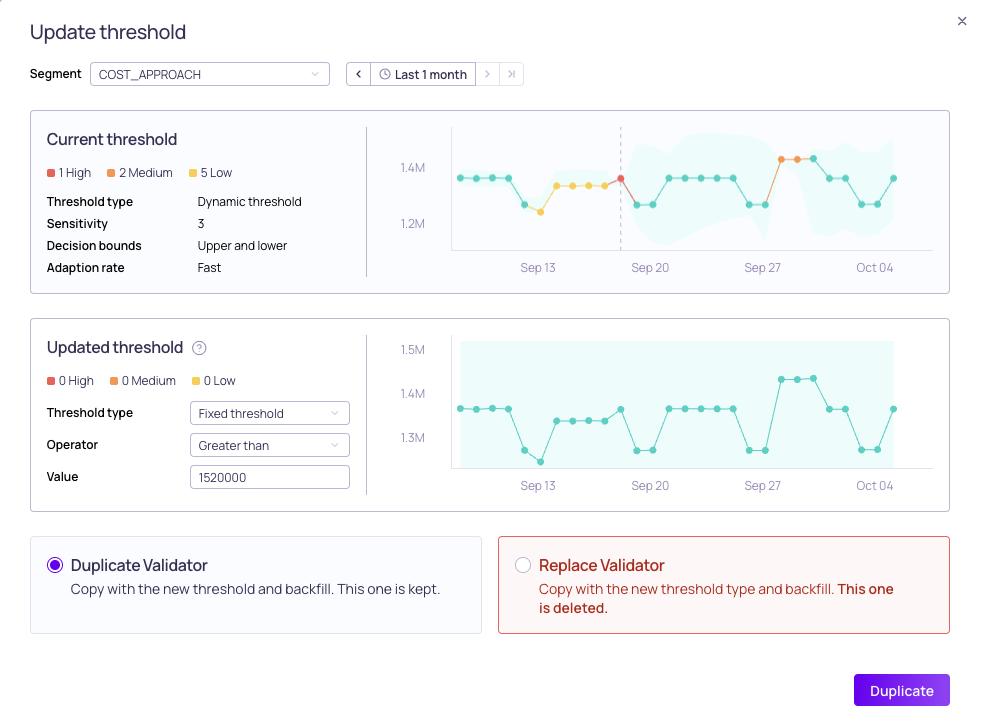
Changing the threshold type
- Duplicate Validator: Creates a copy of the validator with the new threshold type and backfills it. The original validator remains unchanged.
- Replace Validator: Creates a backfilled copy of the validator with the new threshold type and the same name, and then deletes the original validator.
Replace Validator deletes the original validator. The following are lost with it:
- The validator ID, and any links that point to the original validator
- The validator's activity history
- The validator's resource name. If you manage validators as code, for example with Validio Code, the original resource shows as missing.
To keep any of these, use Duplicate Validator instead.
Limitations
- In a namespace with approval workflows enabled, Replace Threshold and Replace Validator are not offered.
- Replace Validator is not offered when a reconciliation validator references the validator.
Updated 6 days ago